Ghee
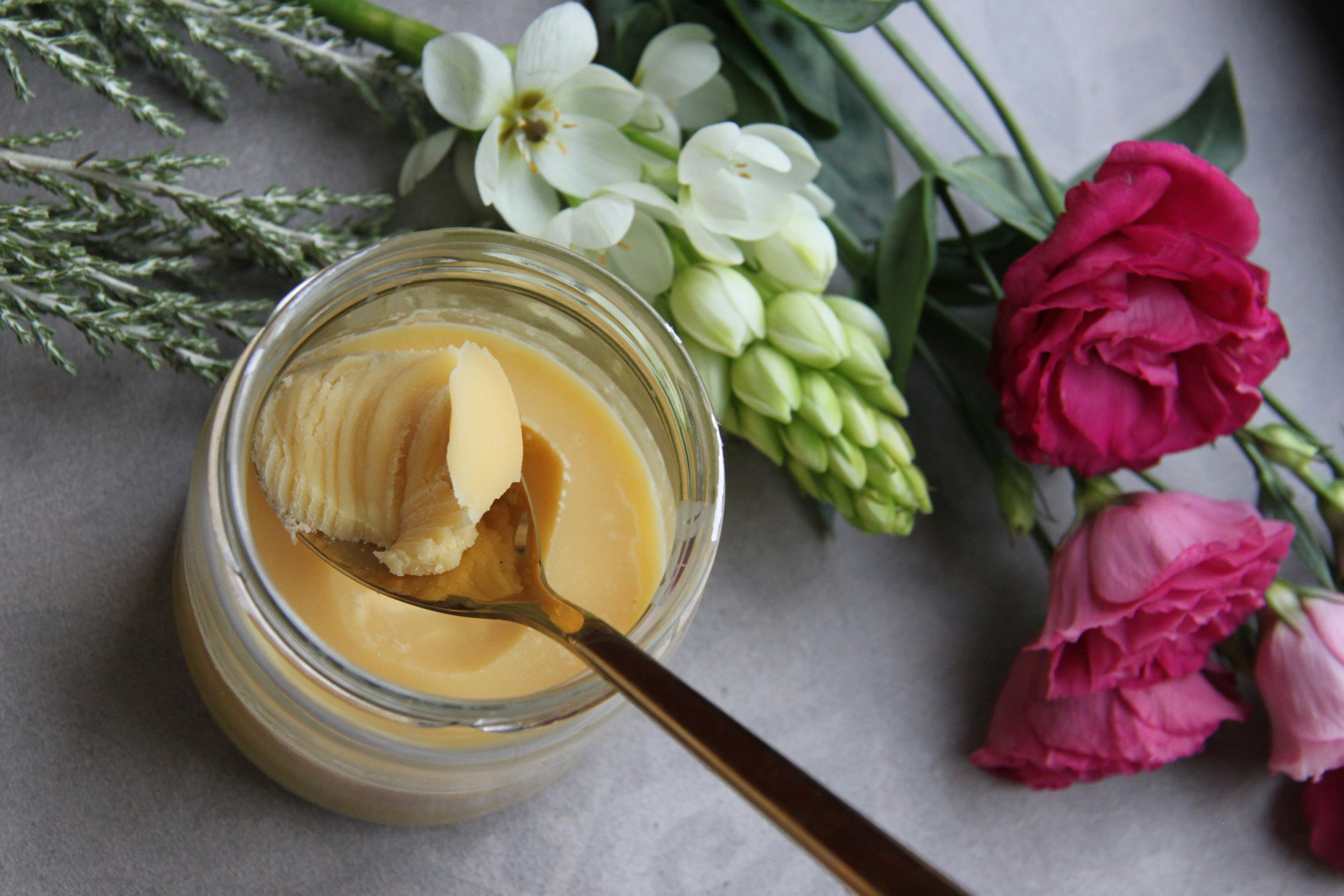
Ghee: Your Ayurvedic Cleansing Ally
Ghee is otherwise closely related to clarified butter and is revered for its ability to lubricate tissues, aid digestion, and gently draw toxins (ama) from the body. It's used in Panchakarma therapies for detoxification and is believed to enhance the potency of other herbs. It’s used the same way olive oil is used in Mediterranean cooking: sparingly, with whole foods, and as part of a balanced meal.
Research hints at the easy digestibility of ghee's healthy fats. Some studies are exploring its soothing effects on the body and its positive influence on gut well-being. Its healthy fats are also essential for nutrient absorption.
As a substance rich in vitamins (like A, D, E, and K), omega-3 and omega-9 fatty acids, butyric acid, and more, it is deeply nourishing as well as detoxifying! These substances support ghee in being an antioxidant, gentle agni kindler (used moderately), and revitalizing the gut as a strong prebiotic.
Ghee isn’t about rejecting modern nutrition—it’s about offering a simple, traditional cooking fat that helps some people eat and digest healthy foods more comfortably. We’re not asking anyone to abandon the Mediterranean diet. We’re simply introducing ghee as a small-amount cooking fat that some people digest better—especially in soups, beans, and vegetables.
Kataria D, Singh G. Health benefits of ghee: Review of Ayurveda and modern science perspectives. J Ayurveda Integr Med. 2024 Jan-Feb;15(1):100819.
Ingredients
1 pound of butter from happy cows: grassfed, free range. Start with one pound of the best butter you can find
Start with the highest quality butter you can. Salted or unsalted will work, though some insist that the best ghee is made with unsalted butter.
You will also need:
a 1 ½ qt cooking pot
a wooden spoon
cheesecloth
fine mesh strainer
flame tamer
two clean pint sized containers with lids
Give yourself time and remain focused on your ghee.
About the sauce pan: I use a 1 ½ quart copper bottomed pan. I find the heat is distributed well and there is less over-browning.
Put the butter in a saucepan. It will melt faster if you cut it up a bit first. Turn the heat to medium-low. After the butter melts, it will start to bubble and separate. Slowly, gently, mindfully stir the cooking butter.
Continue to cook the butter until it turns clear and the milk solids sink to the bottom.
You can stop at this point: you’ve made clarified butter, You want to continue to stir and the milk solids will sink to the bottom of the pan. It should no longer be sputtering. Turn off the heat and wait 10 minutes.
Strain this trough cheesecloth lining a fine sieve into very clean dry jars or a ghee container. This ghee can remain unrefrigerated. Be sure to use a clean utensil every time you dip in to use the ghee to prevent contamination.
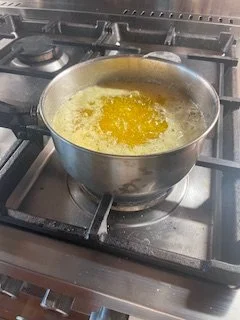
Picture of Ghee boiling
The heat is on low, the butter is sputtering and you can see the water rising in tiny streams of small bubbles to the surface. Stir clockwise, mindfully. I like to say: Om Aim Hrim, Klim or sing to myself when I make my ghee.
